Introduction
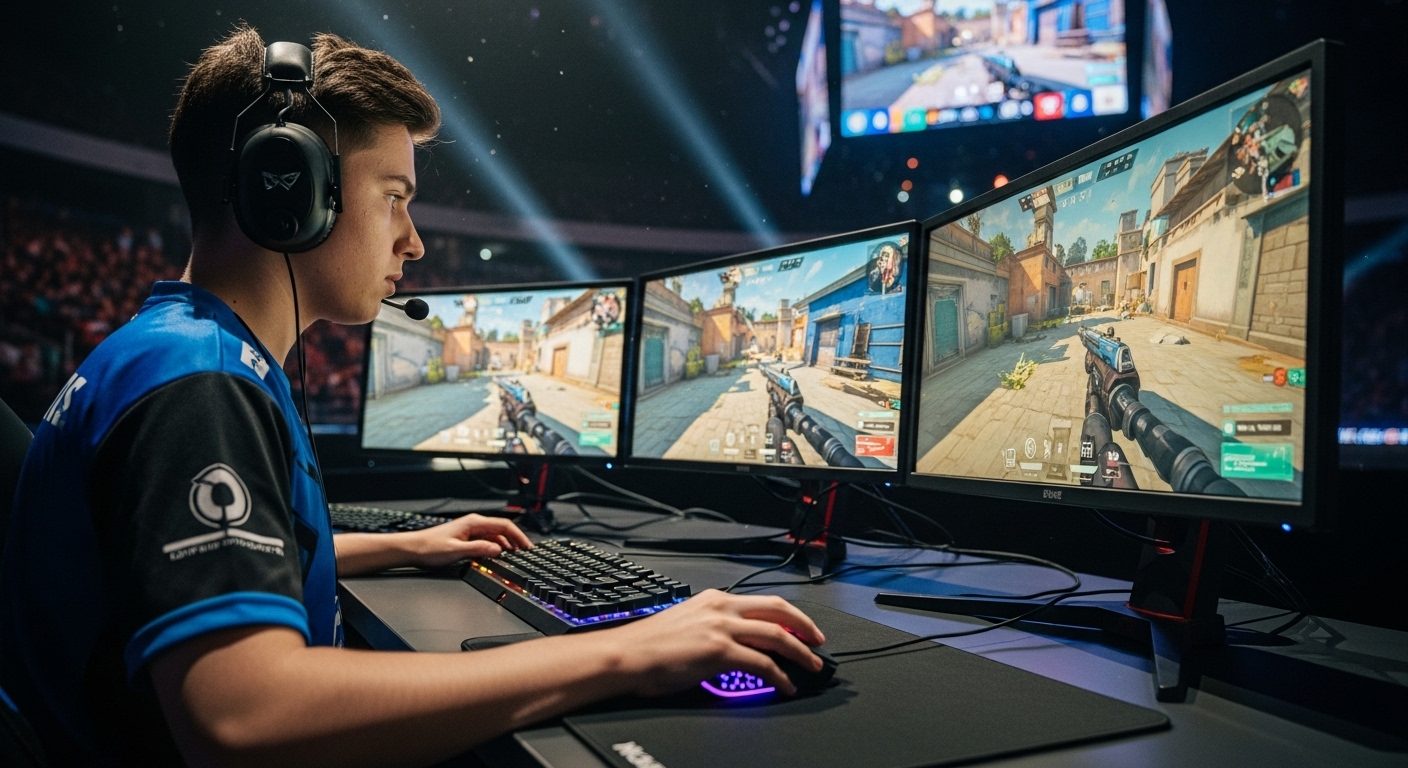
Esports has evolved into a global phenomenon that mirrors the drama, passion, and intensity of traditional sports. What makes esports truly captivating are the rivalries that ignite fanbases and push players and teams to their limits. From legendary matchups that span continents to ongoing feuds that define generations of players, these rivalries are the heartbeat of competitive gaming. They drive innovation, improve skill levels, and create unforgettable moments in esports history.
International rivalries in esports go beyond the game itself. They embody national pride, cultural differences, and stylistic clashes between regions. Just as Brazil and Argentina are iconic rivals in football or India and Pakistan in cricket, esports has its own legendary showdowns that shape the competitive landscape. In this blog, we will explore the best international esports rivalries that have defined the industry, their impact on global esports culture, and how they continue to influence modern competitive gaming.
The Essence of Rivalries in Esports
Before diving into specific rivalries, it is essential to understand why rivalries are so crucial in esports. Competition thrives on conflict—when two players or teams are evenly matched, their battles create narratives that engage fans and media alike. These rivalries often define eras in games such as League of Legends, Counter-Strike: Global Offensive, Dota 2, and Overwatch.
International rivalries often stem from regional playstyles. For example, Korean teams are known for their mechanical precision and discipline, while Western teams often emphasize creativity and adaptability. When these contrasting styles collide, the results are legendary. Over time, these matchups become emotional battles that symbolize more than just a win or loss—they represent national pride and the evolution of esports itself.
League of Legends: Korea vs. China
One of the most enduring and high-profile rivalries in esports is between South Korea and China in League of Legends. Since the early days of the game’s competitive scene, Korea has dominated with unmatched discipline and tactical mastery. Teams like T1 (formerly SK Telecom T1) and Samsung Galaxy established Korea as the epicenter of excellence.
China, on the other hand, has always been the challenger. Early on, Chinese teams were known for their aggressive playstyles, often taking risks that could lead to either spectacular victories or crushing defeats. This difference in philosophy made their clashes especially thrilling.
When Chinese teams like Invictus Gaming and FunPlus Phoenix finally broke Korea’s dominance by winning the World Championships in 2018 and 2019, it felt like the end of an era and the beginning of a new one. These victories were not just wins for individual organizations—they were victories for the entire Chinese esports scene. Today, the rivalry remains intense, with each World Championship reigniting the debate over which region reigns supreme.
Dota 2: Europe vs. China
In Dota 2, the rivalry between Europe and China has shaped the game’s competitive identity. Each region represents a unique philosophy of play. European teams, led by organizations like OG, Team Secret, and Natus Vincere, focus on creativity, flexibility, and drafting innovations. Chinese teams such as PSG.LGD and Vici Gaming are known for their disciplined, structured approach to strategy and execution.
The rivalry reached its peak during The International tournaments. The International 2011 saw Natus Vincere from Europe dominate, while in 2014, Newbee from China struck back to win the Aegis of Champions. Each subsequent year brought new stories, heroes, and heartbreaks.
The most memorable moment came in 2018 and 2019 when OG, a European team, defied all odds to win back-to-back Internationals, defeating China’s PSG.LGD in epic grand finals both times. These matches are often considered the greatest in Dota 2 history, representing the essence of international esports competition—skill, strategy, and emotional storytelling.
Counter-Strike: Europe vs. North America
Few esports rivalries are as historic and emotional as that between Europe and North America in Counter-Strike. For decades, European teams have been considered the gold standard. Organizations like Astralis, Fnatic, and Natus Vincere have dominated major tournaments through superior tactics and experience.
North America, however, has always been the underdog with something to prove. Teams like Team Liquid and Cloud9 have carried the hopes of an entire continent, striving to dethrone their European counterparts. The rivalry reached its peak at the ELEAGUE Major: Boston 2018, when Cloud9 became the first North American team to win a Major, defeating FaZe Clan in a heart-stopping final.
That moment was more than a victory—it was a breakthrough for North American Counter-Strike. It symbolized the region’s growth and its ability to stand toe-to-toe with Europe’s best. Although Europe continues to dominate overall, the passion and unpredictability of this rivalry keep fans engaged year after year.
Overwatch: USA vs. South Korea
In Overwatch, South Korea initially stood untouchable, dominating the international stage with unmatched skill and coordination. From 2016 to 2018, the Korean national team won three consecutive Overwatch World Cups, establishing themselves as the undisputed kings.
The United States, however, slowly rose to challenge them. In 2019, after years of defeat, Team USA finally overcame South Korea in a historic semifinal before going on to win the entire tournament. This victory represented a major shift in competitive balance and showed that even the most dominant dynasty could be dethroned.
This rivalry is significant because it mirrors the growth of Western esports infrastructure. The dedication of North American teams to catching up with Korea’s disciplined training methods demonstrated how international competition can drive entire regions to improve.
StarCraft II: Korea vs. The World
No discussion about international esports rivalries is complete without mentioning StarCraft II. For many years, the game was synonymous with South Korean dominance. Korean players like Lee “Life” Seung Hyun, Lim “BoxeR” Yo Hwan, and Lee “Flash” Young Ho became national icons, showcasing near-perfect precision and tactical brilliance.
However, as the global scene evolved, foreign players began to challenge Korea’s supremacy. European players such as Joona “Serral” Sotala from Finland and Riccardo “Reynor” Romiti from Italy have since become legends for breaking into what was once an impenetrable Korean fortress.
Serral’s victory at the 2018 WCS Global Finals was a watershed moment for international esports. It was the first time a non-Korean had won a global StarCraft II championship, symbolizing the maturity and balance of the international scene. Since then, “Korea vs. the World” has become a recurring storyline, with fans eagerly anticipating each clash between East and West.
Valorant: North America vs. EMEA
With Valorant emerging as one of the fastest-growing esports, new rivalries have taken shape—most notably between North America (NA) and Europe, the Middle East, and Africa (EMEA). From the very start of Valorant’s professional scene, both regions have claimed superiority.
NA teams such as Sentinels, OpTic Gaming, and 100 Thieves brought aggressive, confident playstyles that quickly won international tournaments. However, European teams like Fnatic and Team Liquid soon adapted, using disciplined coordination and tactical depth to reclaim dominance.
The rivalry reached a fever pitch during international Masters events and the Valorant Champions tournaments, where NA and EMEA teams frequently clashed in grand finals. Each encounter became a statement of regional pride, with fans across continents debating whose strategies were more effective. The constant back-and-forth victories have ensured that this rivalry remains one of the most entertaining in modern esports.
Fighting Games: Japan vs. The United States
In fighting games such as Street Fighter and Tekken, the rivalry between Japan and the United States has spanned decades. Japan’s arcade culture gave rise to some of the most technically skilled players in the world, known for their precise execution and deep game knowledge. The United States, on the other hand, brought raw aggression and showmanship to the competitive scene.
Legendary moments such as Daigo Umehara’s “Evo Moment 37” in Street Fighter III defined not just the rivalry but also the spirit of competitive gaming itself. Every major fighting game tournament, from EVO in Las Vegas to tournaments in Tokyo, serves as a battleground for national pride.
In Tekken, the rivalry continues to evolve, with Japanese veterans facing rising stars from the US and even players from Korea and Pakistan joining the mix. This dynamic has transformed fighting games into one of the most globally diverse esports scenes, uniting players through skill, respect, and cultural exchange.
Rainbow Six Siege: Brazil vs. Europe
In Rainbow Six Siege, Brazil and Europe have developed one of the most passionate rivalries in recent years. European teams like G2 Esports and BDS Esport initially dominated the competitive landscape, but Brazilian teams such as Ninjas in Pyjamas and Team Liquid quickly rose to prominence.
Brazilian squads are known for their aggression and fearless tactics, which often contrast with Europe’s more methodical approach. When Ninjas in Pyjamas won the Six Invitational in 2021, it marked a turning point, showing that Brazil could stand at the top of the world.
This rivalry is celebrated for the passion of Brazilian fans and the technical prowess of European teams, making every international tournament an emotional rollercoaster for both sides.
The Cultural and Economic Impact of Esports Rivalries
Beyond competition, these international rivalries have significantly influenced global esports culture and economics. Rivalries fuel fan engagement, merchandise sales, and viewership growth. When two powerhouse regions clash, millions of fans tune in, creating record-breaking online audiences.
Culturally, these rivalries also help bridge global communities. Fans from different countries interact online, share memes, and debate strategies, fostering international friendships through digital platforms. Rivalries also motivate young players to pursue professional gaming careers, hoping to represent their region on the world stage.
Economically, these matchups attract major sponsors and brands eager to tap into diverse markets. When Korea faces China or North America battles Europe, companies see massive marketing opportunities. This financial support helps grow the infrastructure of esports, including better training facilities, coaching systems, and youth programs.
The Evolution of Rivalries Over Time
What makes esports rivalries unique is how quickly they evolve. Unlike traditional sports, where rivalries can span a century, esports is still relatively young. Games come and go, but the emotions they generate remain timeless.
For example, the rivalry between Korean and Western teams in League of Legends has persisted for over a decade, but its dynamics have shifted as new players and organizations emerge. Similarly, Valorant’s NA vs. EMEA rivalry is still young but already producing iconic matches that fans will remember for years.
The beauty of esports lies in its adaptability. New titles like Apex Legends, PUBG, and Fortnite continually introduce new opportunities for global competition. As technology advances and the world becomes more interconnected, future rivalries will likely transcend regions, bringing together teams from every corner of the planet.
The Role of Fans in Sustaining Rivalries
Fans play an indispensable role in keeping rivalries alive. Their enthusiasm fuels the energy of tournaments and social media discussions. The chants, cheers, and even friendly online banter between fanbases elevate the emotional stakes of every match.
In many cases, the storylines fans create become as influential as the games themselves. Memorable hashtags, community tributes, and reaction videos all contribute to the culture of esports. Rivalries give fans a reason to unite behind their favorite players or nations, fostering a sense of belonging that transcends borders.
Conclusion
International esports rivalries are the lifeblood of competitive gaming. They transform matches into stories of pride, perseverance, and passion. From Korea vs. China in League of Legends to Europe vs. North America in Counter-Strike, these rivalries define eras, inspire players, and captivate millions of fans around the world.
As esports continues to expand, new rivalries will emerge, and existing ones will evolve. What remains constant is the human element—the drive to compete, to improve, and to represent one’s region with honor. These rivalries are not just battles for trophies; they are the heartbeats of a global community that thrives on competition and camaraderie.
The world of esports is still young, and the stories are still being written. As players push boundaries and nations collide in digital arenas, one thing is certain: international rivalries will continue to shape the destiny of esports for generations to come.