In recent years, esports has evolved from a niche hobby into a global phenomenon. Once considered a pastime for a select group of gaming enthusiasts, esports has grown into a multi-billion-dollar industry, attracting millions of viewers, players, and investors worldwide. The rise of esports highlights how technology, entertainment, and competition are merging to create a new frontier in sports and culture. This blog explores the growth of esports, the professional ecosystem, the impact on society, and the future of competitive gaming.
The Evolution of Esports
The origins of esports can be traced back to the 1970s and 1980s when arcade games like Space Invaders and Pac-Man gained popularity. However, it wasn’t until the late 1990s and early 2000s that competitive gaming started to take shape in a structured format. Tournaments began to appear for games such as StarCraft, Counter-Strike, and Quake. These events were initially small, often organized by local gaming communities or universities, but they laid the foundation for competitive gaming.
The real breakthrough came with the rise of online gaming. The widespread availability of the internet allowed players from around the world to compete with each other in real time. Games like Warcraft III, League of Legends, and Dota 2 became popular platforms for competition, giving rise to professional gaming communities and tournaments with substantial prize pools. Today, esports tournaments attract hundreds of thousands of live viewers and millions of online spectators, rivaling traditional sports in popularity and viewership.
The Structure of Professional Esports
Professional esports has a structured ecosystem similar to traditional sports. At the core are the professional players who dedicate years to mastering their skills. These players often start young, honing reflexes, strategic thinking, and teamwork abilities. Many esports teams recruit players through rigorous scouting systems, academies, and online competitions.
Teams participate in leagues and tournaments, often organized by game developers or independent organizations. The competitive format varies depending on the game, but generally includes qualifiers, regular seasons, and major championship events. The stakes are high, with prize pools ranging from thousands to millions of dollars. For instance, the Dota 2 International Championship consistently boasts one of the largest prize pools in esports history.
Beyond players, the esports ecosystem includes coaches, analysts, streamers, and commentators who contribute to the game’s strategic, entertainment, and educational aspects. Sponsors and advertisers also play a significant role, as companies recognize the potential of reaching a young, tech-savvy audience through esports.
Popular Esports Titles and Genres
Esports encompasses a wide range of genres, each attracting unique audiences. Multiplayer Online Battle Arena (MOBA) games like League of Legends and Dota 2 dominate with large player bases and viewership. These games emphasize strategy, coordination, and quick decision-making, offering thrilling experiences for both players and spectators.
First-Person Shooters (FPS) such as Counter-Strike: Global Offensive, Call of Duty, and Valorant focus on precision, reflexes, and tactical gameplay. These games often feature fast-paced, high-intensity matches that captivate viewers with their suspense and skill displays.
Sports simulation games, including FIFA and NBA 2K, recreate traditional sports in a digital format, blending real-world sports fandom with gaming. Fighting games, like Street Fighter and Super Smash Bros., and battle royale games, such as Fortnite and Apex Legends, further diversify the esports landscape, each cultivating dedicated communities and competitive circuits.
Esports as a Spectator Sport
One of the most remarkable aspects of esports is its transformation into a spectator sport. Streaming platforms, including Twitch and YouTube Gaming, have revolutionized how audiences engage with esports. Fans can watch live tournaments, follow their favorite players, and interact with communities in real time. Unlike traditional sports, esports allows for direct engagement between players and fans, creating a more personal and interactive experience.
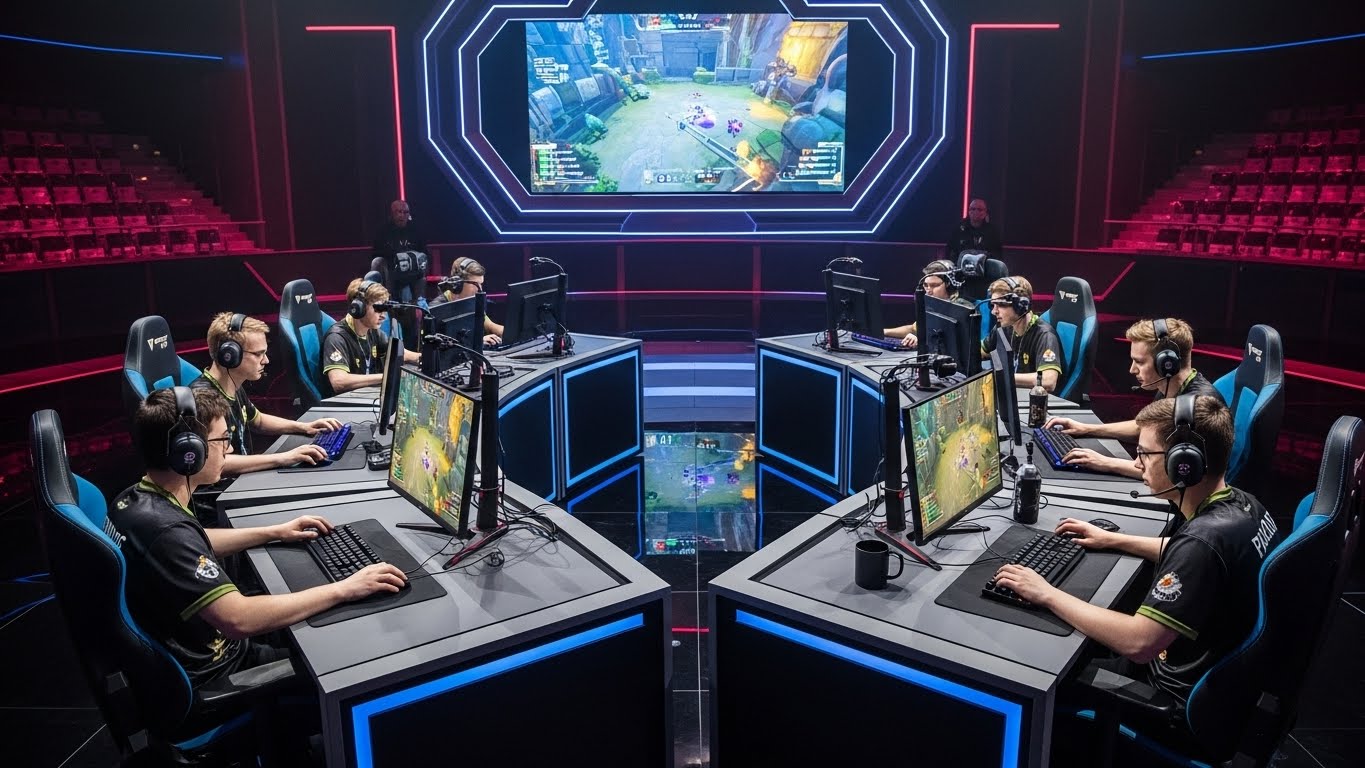
Esports events are now hosted in large arenas with live audiences, mirroring traditional sports championships. The energy and excitement in these venues rival that of professional football or basketball games. Spectators cheer for their favorite teams, witness incredible displays of skill, and experience the drama of high-stakes competition. The combination of live events and online streaming has propelled esports into mainstream entertainment, attracting viewers from diverse demographics.
Economic Impact and Career Opportunities
The economic impact of esports is staggering. The industry generates revenue through tournament prize pools, sponsorships, merchandise sales, media rights, and streaming platforms. Major tournaments offer prize pools in the millions, and top professional players earn substantial salaries, endorsements, and sponsorship deals. Esports organizations have become legitimate businesses, employing staff across marketing, management, coaching, and content creation.
Beyond professional play, esports has created numerous career opportunities. Game developers, event organizers, broadcasters, analysts, and content creators all contribute to the ecosystem. Even roles like esports psychologists, nutritionists, and fitness coaches are becoming increasingly common, as teams recognize the importance of mental and physical well-being for peak performance.
Moreover, universities and colleges now offer scholarships and programs focused on esports, enabling students to pursue higher education while training for professional gaming careers. This academic integration reflects esports’ growing legitimacy and long-term potential as a career path.
Esports and Social Impact
Esports is reshaping social dynamics and community building. Online gaming communities provide a sense of belonging, camaraderie, and teamwork for players worldwide. Multiplayer games foster collaboration, communication, and strategic thinking, skills that translate to real-world scenarios. For many, esports is more than entertainment; it is a platform for social interaction, personal growth, and global connection.
Esports also challenges traditional perceptions of sports. It demonstrates that competitive gaming requires skill, strategy, discipline, and dedication—qualities traditionally associated with physical sports. As society increasingly embraces digital culture, esports is bridging the gap between virtual and real-world competition, inspiring new generations to pursue their passions without limitations.
Challenges Facing the Esports Industry
Despite its rapid growth, esports faces several challenges. One significant concern is player burnout. Professional gamers often train for long hours under high-pressure conditions, leading to physical and mental strain. Managing health, work-life balance, and career longevity is a crucial issue for the industry.
Another challenge is regulation and standardization. Unlike traditional sports, esports lacks a unified governing body, resulting in inconsistent rules, tournament formats, and player contracts. Addressing these issues is essential for ensuring fair competition, protecting players, and maintaining credibility.
Additionally, the industry grapples with inclusivity and diversity. While esports attracts a global audience, barriers still exist for women and underrepresented groups. Efforts to promote equal opportunities, safe environments, and diverse representation are ongoing and vital for the long-term sustainability of the industry.
The Future of Esports
The future of esports is incredibly promising. Technological advancements such as virtual reality, augmented reality, and artificial intelligence are poised to transform gameplay, training, and spectator experiences. VR and AR could create fully immersive tournaments, allowing fans to feel as though they are inside the game, while AI can assist with player analytics, strategy optimization, and performance evaluation.
Esports is also likely to see increased integration with traditional sports. Collaborations between professional leagues, sponsorship deals with major sports brands, and the inclusion of esports in multi-sport events highlight its potential as a mainstream competitive field. Furthermore, the continued expansion of mobile esports is opening opportunities for millions of casual gamers to participate in professional circuits, broadening the industry’s reach.
Educational initiatives and career programs will continue to shape the professional landscape, offering structured pathways for aspiring players, coaches, and industry professionals. As esports becomes more accessible and widely recognized, it will cement its place as a legitimate, respected, and enduring form of competitive entertainment.
Conclusion
Esports has transformed from a niche hobby into a dynamic, multi-billion-dollar industry that rivals traditional sports in popularity, skill, and cultural significance. It offers thrilling competition, global community engagement, and significant economic opportunities, while challenging perceptions of what it means to be an athlete in the digital age. Despite its challenges, the growth trajectory of esports is undeniable, driven by innovation, passion, and the universal appeal of competition. As technology continues to evolve and audiences expand, esports is set to remain a defining force in entertainment, culture, and sports for years to come.