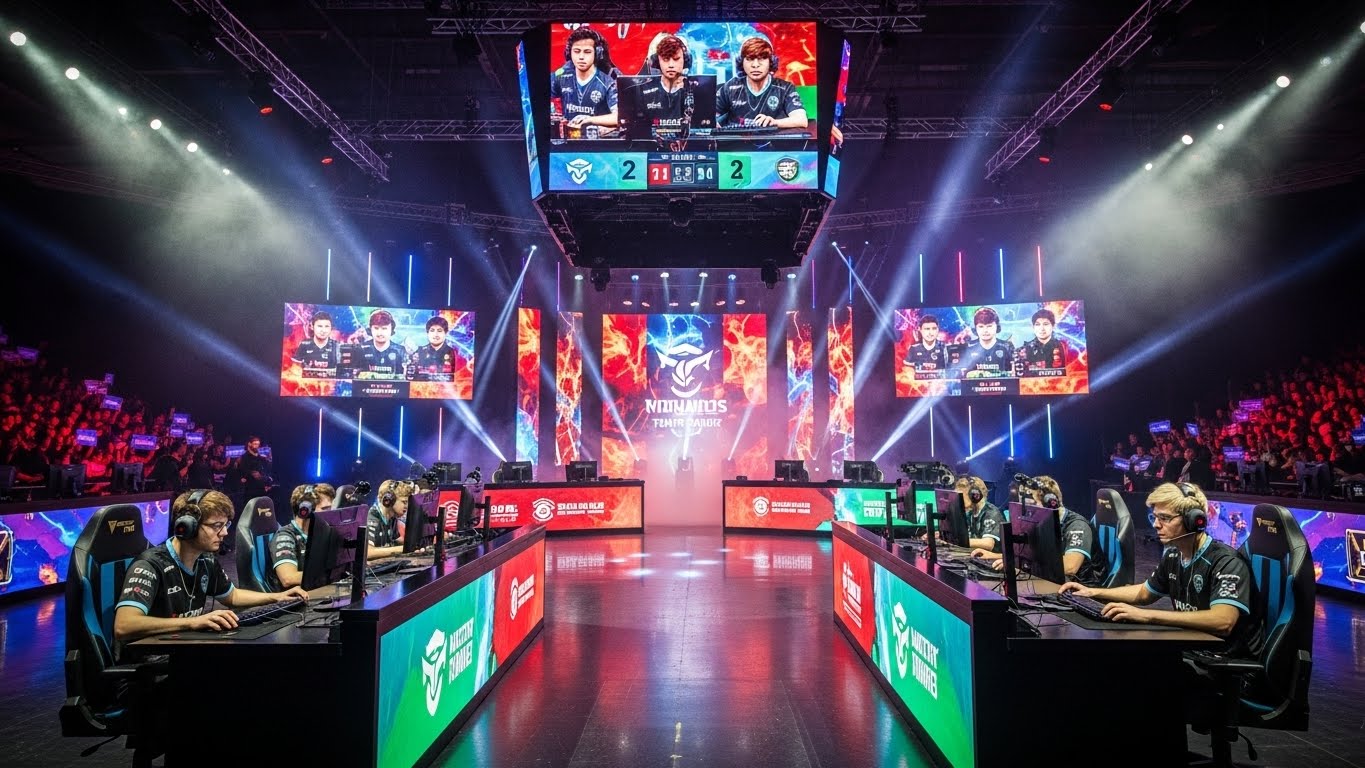

In the world of esports, few genres have left as profound a mark as MOBAs, or Multiplayer Online Battle Arenas. Since the mid-2000s, MOBA games have evolved from modded experiments into full-fledged global esports phenomena. Titles like League of Legends, Dota 2, and Smite have not only drawn millions of players worldwide but have also shaped the very structure of competitive gaming.
This blog explores how MOBA games dominated competitive play, examining their unique design, spectator appeal, strategic depth, and influence on esports culture.
The Origins of MOBA Games
The MOBA genre began as a mod for the real-time strategy game Warcraft III, called Defense of the Ancients (DotA). Players controlled individual heroes instead of entire armies, and the goal was to destroy the opponent’s base.
DotA introduced key elements that would define MOBAs:
- Hero-based gameplay with unique abilities.
- Team-oriented objectives requiring coordination and strategy.
- Creep and resource management that combined micro and macro skills.
- High skill ceiling allowing for continuous player growth and mastery.
The success of DotA paved the way for standalone MOBA titles, most notably League of Legends (LoL) in 2009 and Dota 2 in 2013, both of which refined gameplay mechanics and expanded the audience.
Strategic Depth and Skill Expression
One reason MOBAs became dominant in competitive esports is their strategic depth. Each game features dozens of heroes with unique abilities, multiple lanes, jungle mechanics, and complex objectives like towers, Roshan, or Baron Nashor.
Players must master:
- Hero mechanics and combos.
- Map awareness and vision control.
- Teamfight positioning and coordination.
- Resource management, including gold, experience, and items.
This depth allows for endless strategic variation, meaning no two matches are ever identical. It rewards not only mechanical skill but also tactical thinking, teamwork, and adaptability. High-level MOBAs are as much about mental acuity as they are about reflexes, making them ideal for professional competition.
Team-Based Competition
MOBAs emphasize team-based gameplay, which naturally translates into competitive esports. Teams of five compete to outmaneuver, out-strategize, and outplay their opponents.
Team dynamics in MOBAs include:
- In-game leadership: Captains or shot-callers guide strategy in real time.
- Role specialization: Each player occupies a lane or role that requires mastery and coordination.
- Communication: Players must relay information about enemy movements, cooldowns, and objectives.
This team-oriented structure creates dramatic narratives in tournaments, where synergy and coordination often outweigh individual talent, making MOBAs compelling to watch.
Spectator Appeal and Broadcast-Friendly Design
MOBAs were built with competitive play in mind, and their design naturally caters to spectators:
- Clear objectives: Towers, inhibitors, and ancient structures give viewers visible goals.
- Hero variety: Each hero’s abilities are visually distinct, making action easy to follow.
- Dramatic comebacks: Strategic swings in gold, map control, and teamfight outcomes create suspense.
- Statistical depth: Viewers can track kills, assists, items, and gold in real time.
These elements make MOBAs highly broadcast-friendly, attracting large audiences for live events and online streams. Esports leagues like the League of Legends World Championship and The International have become global spectacles, rivaling traditional sports in viewership.
The Rise of Professional Leagues
MOBA games have dominated competitive play largely because of the professional ecosystem built around them. Developers and organizers created structured leagues with sponsorships, standardized rules, and global tournaments.
Key developments include:
- League of Legends Championship Series (LCS, LEC, LCK): Regional leagues feeding into the World Championship.
- Dota 2’s The International: Featuring multi-million-dollar prize pools and global team participation.
- Smite World Championship: Bringing console MOBAs into competitive arenas.
These leagues provide players with career opportunities, incentivize peak performance, and create narratives that draw fans year after year.
The Role of Prize Pools and Sponsorships
Another factor in MOBA dominance is the financial stakes. Games like Dota 2 have redefined esports prize pools through crowdfunding, with The International offering over $40 million in recent editions.
High rewards attract the best talent, increase competition, and legitimize esports as a career. Sponsorships from brands, media deals, and merchandising further bolster the scene, creating a sustainable ecosystem around MOBA competition.
Accessibility and Global Appeal
MOBAs are accessible to players worldwide. While skill-intensive, most MOBAs are free-to-play, lowering the barrier to entry. This accessibility has led to large player bases across Asia, Europe, and North America, fueling regional competitions and fostering international rivalries.
Additionally, the genre’s cultural adaptability has made it popular in diverse markets. For example:
- South Korea embraced League of Legends, creating a strong LCK scene.
- China developed dominant Dota 2 teams, particularly in The International tournaments.
- Europe and North America built thriving competitive circuits with diverse talent.
This global appeal helped MOBAs dominate the competitive landscape, attracting sponsors, investors, and millions of fans worldwide.
Continuous Evolution and Meta
MOBAs thrive because they constantly evolve. Developers regularly update heroes, items, and game mechanics, which keeps the meta fresh and challenges players to adapt.
This constant evolution ensures:
- Long-term engagement for both players and viewers.
- Opportunities for new strategies to emerge, keeping competition unpredictable.
- A level playing field where experience and adaptation determine success.
The ever-changing meta prevents stagnation, ensuring that tournaments remain exciting and competitive.
Community and Content Creation
MOBA communities are highly active, producing guides, highlight videos, and analysis content. This community engagement drives esports viewership and helps maintain the genre’s dominance.
Content creators and professional players provide:
- Strategy breakdowns for fans.
- Educational material for aspiring players.
- Memorable highlight reels for global audiences.
By fostering both competitive and casual engagement, MOBAs create a self-sustaining ecosystem that feeds esports popularity.
Iconic MOBA Tournaments
Several MOBA tournaments have become landmarks in esports history:
- The International (Dota 2): Known for its massive prize pool and high-stakes competition.
- League of Legends World Championship: The most watched esports event globally.
- Mid-Season Invitational (LoL) and regional finals: Highlighting international rivalries and talent.
These tournaments showcase the skill, strategy, and drama inherent to MOBAs, further cementing their place at the top of competitive gaming.
Influence on Other Esports Genres
The dominance of MOBAs has influenced other esports in multiple ways:
- Professional structure: Leagues, franchising, and seasonal competition became standard.
- Spectator presentation: Broadcast tools, in-game statistics, and camera systems improved across genres.
- Strategic depth: Games like Overwatch and Valorant incorporated hero-based or role-based mechanics inspired by MOBAs.
In this way, MOBAs not only dominate their own space but also shape the broader esports industry.
Conclusion
MOBA games dominate competitive play due to their strategic depth, team-based gameplay, spectator appeal, professional leagues, and global accessibility. Games like League of Legends and Dota 2 have created ecosystems where players, teams, and fans thrive, establishing a sustainable and high-stakes competitive scene.
From iconic tournaments to ever-evolving gameplay and strategic innovation, MOBAs set the standard for what esports can achieve. They demonstrate that competitive gaming isn’t just about mechanical skill — it’s about teamwork, strategy, mental fortitude, and the ability to adapt under pressure.
By combining accessibility, depth, and entertainment, MOBAs have proven themselves as the cornerstone of esports, dominating competitive play for over a decade and shaping the future of the industry.