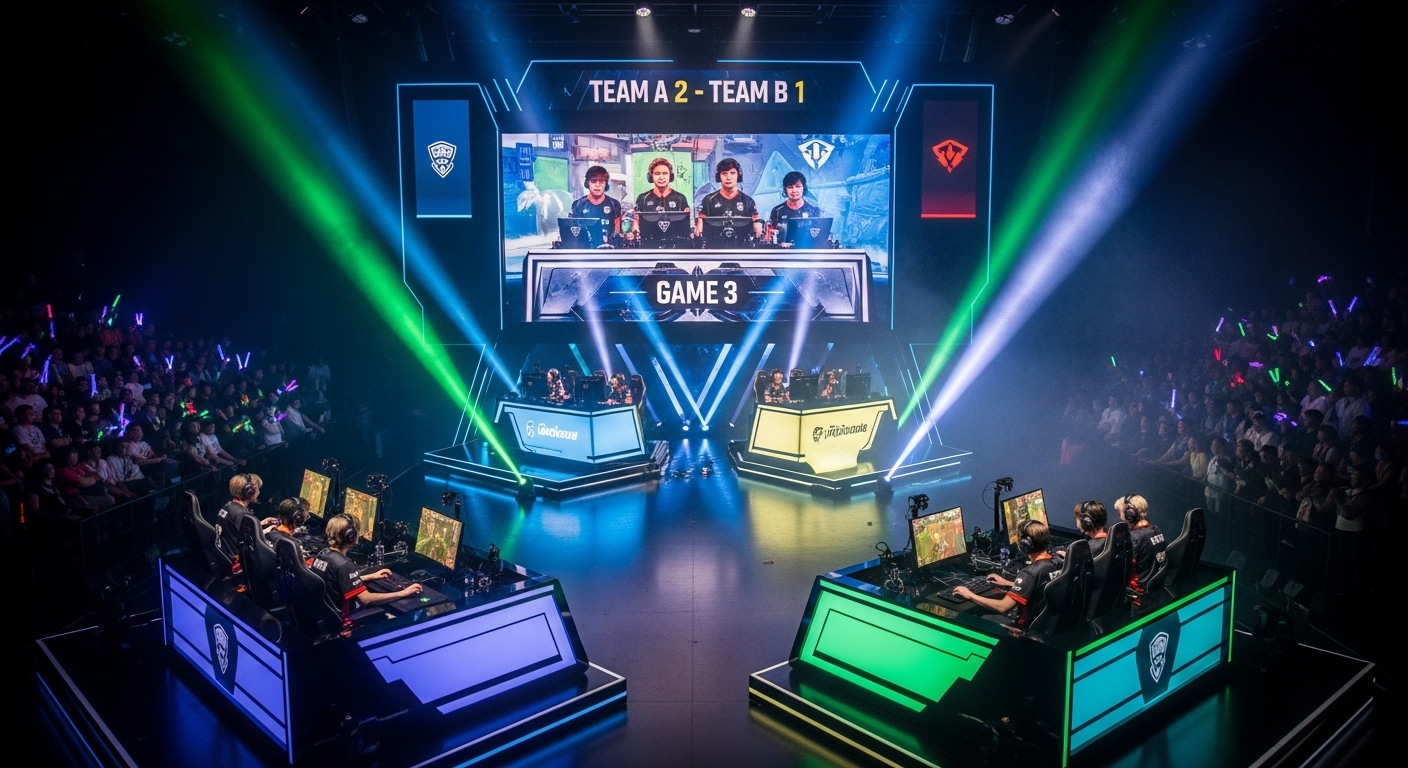

Esports, or competitive gaming, is no longer just a niche activity confined to the realm of hardcore gamers. Over the past two decades, esports has evolved from humble beginnings to a global entertainment powerhouse. Millions of players, teams, and viewers now participate in this digital revolution. What was once seen as a fringe activity has now become a mainstream sport, with millions of dollars in prize pools, corporate sponsorships, professional leagues, and an ever-growing fanbase.
In this blog post, we’ll explore the journey of esports from its early days to its status today as a global phenomenon, and we’ll also take a look at where it is headed in the future. From its technological foundations to the cultural impact it has made, esports is reshaping the way we view sports and entertainment.
The Birth of Esports: Early Years of Competitive Gaming
The roots of esports can be traced back to the 1970s when video games first became a cultural phenomenon. While competitive gaming was not widely organized during these early years, the idea of playing games against others, either in arcades or in local gatherings, slowly started taking shape.
The 1972 Stanford Tournament: The First Known Gaming Competition
In 1972, Stanford University held the first known video game competition, called the “Intergalactic Spacewar Olympics.” The event was a simple competition based on the game Spacewar, one of the first video games ever created. Although this tournament was small in scope, with just a few players participating, it was the first instance of video games being played competitively. It was an early hint of the potential future of organized gaming.
However, esports as we know it today was still far from realization. The idea of gaming as a sport was still largely inconceivable to most people.
The Growth of Multiplayer Games in the 1990s
As the 1990s arrived, multiplayer gaming gained momentum with the release of Doom in 1993. This first-person shooter (FPS) allowed players to connect over local area networks (LANs), and it became a popular title for competitive gaming. The Doom community began organizing local tournaments, which attracted a growing number of players interested in testing their skills in multiplayer environments.
However, it wasn’t until 1997 that a true esports tournament was held. The Red Annihilation tournament for Quake is often seen as the first official esports event, featuring a $1,000 prize pool. This tournament marked the first time that professional-level competitive gaming became a reality, and it laid the groundwork for the esports scene we know today.
The Rise of Online Gaming and the Formation of Esports Communities
With the turn of the millennium, the internet’s accessibility began to grow. Games with online multiplayer features, such as Warcraft III and StarCraft, allowed players to connect with others from around the world. As the internet became more widespread, it transformed competitive gaming, leading to the formation of esports communities.
The Birth of Online Tournaments
By the early 2000s, esports tournaments started to shift from small-scale LAN parties to large-scale global competitions. Titles like StarCraft and Warcraft III took center stage, as these games offered online multiplayer features that allowed for global competitions. At the same time, early esports organizations like the World Cyber Games (WCG), founded in 2000, began to host large international tournaments, further legitimizing the idea of competitive gaming on a global scale.
The Impact of StarCraft in South Korea
One of the most significant milestones in the growth of esports occurred in South Korea in the early 2000s. The release of StarCraft became a national sensation, and South Korea became the first country to fully embrace esports as a legitimate form of entertainment. StarCraft players were treated as celebrities, and televised esports competitions became a regular part of Korean TV programming.
The creation of professional esports leagues like the Korean Pro League in 2003 and the rise of broadcasting networks like OGN (OnGameNet) and MBCGame in Korea helped esports explode in popularity. These leagues and broadcasts helped establish a formal structure for competitive gaming, and they laid the groundwork for the modern esports ecosystem.
The Explosion of Esports in the 2010s: Global Recognition and Professionalization
The 2010s marked the period when esports transformed from a niche community activity into a mainstream, professional sport. Several key factors played a role in this transition: the rise of streaming platforms, the expansion of esports titles, and the introduction of multi-million-dollar tournaments.
The Streaming Revolution: Twitch and the Rise of Esports Broadcasting
One of the most pivotal changes for esports in the 2010s was the launch of Twitch, a platform dedicated to streaming live video games. Twitch allowed gamers to broadcast their gameplay to a global audience, and it quickly became the go-to platform for esports fans. In fact, many esports tournaments started to be broadcast live on Twitch, and this was a key factor in expanding the reach of competitive gaming.
The platform offered a unique opportunity for both players and fans. Viewers could now watch their favorite teams compete in real-time, often alongside commentary that analyzed the gameplay. For players, Twitch offered a way to connect with fans, build their personal brand, and even make money through subscriptions and donations.
By 2014, Twitch was acquired by Amazon, a sign of its growing influence in the world of online entertainment. As the platform continued to grow, esports tournaments and leagues were able to draw in millions of viewers, pushing the global popularity of esports to new heights.
The Emergence of Major Esports Titles
In the 2010s, several games became staples in the competitive gaming scene. Titles like League of Legends (LoL), Dota 2, Counter-Strike: Global Offensive (CS:GO), and Overwatch attracted massive player bases and large viewerships for their competitive scenes. These games offered rich, strategic gameplay with professional-level mechanics that made them perfect for tournament play.
League of Legends, for example, introduced its annual World Championship, which quickly became one of the largest esports events in the world. By 2016, the LoL World Championship had attracted an audience of over 43 million viewers, a testament to the growing popularity of esports.
Dota 2 followed suit with its International Tournament, which became famous for offering some of the largest prize pools in esports history, reaching upwards of $30 million in 2021. These prize pools, fueled by crowdfunding and sponsorship deals, helped elevate esports to a new level of professionalism.
Corporate Sponsorship and Media Attention
As esports grew, it attracted major corporate sponsorships from global brands like Coca-Cola, Intel, and Red Bull. These companies saw the potential for esports to connect with younger, tech-savvy audiences, and they invested heavily in supporting esports teams, tournaments, and events. The influx of sponsorship money helped fuel the growth of professional leagues and teams, and it made esports a viable career path for many talented gamers.
Esports also began to receive more attention from traditional sports media outlets, as major publications like ESPN, BBC, and Forbes started covering esports events. This helped legitimize esports as a form of entertainment, similar to traditional sports, and allowed it to reach a broader audience.
Esports as a Global Industry: The Present Day
Today, esports is a thriving global industry worth billions of dollars. It encompasses not only competitive gaming, but also streaming, broadcasting, merchandise, sponsorships, and even university-level competitions.
Professional Esports Leagues and Teams
The rise of esports as a professional sport has resulted in the formation of major esports leagues and organizations. These leagues, which are modeled after traditional sports leagues, offer year-round competition for top-tier players and teams. Some notable esports leagues include the Overwatch League (OWL), the League of Legends Pro League (LPL), and the Call of Duty League (CDL).
These leagues are organized, structured, and provide players with contracts, salaries, and benefits. Teams in these leagues are often backed by major investors and sponsors, and they compete for large cash prizes and global recognition.
The Role of Esports in the Olympics Debate
One of the most exciting developments in the world of esports is the ongoing debate about its inclusion in the Olympic Games. While there are still significant obstacles to overcome—such as the lack of physical activity involved in gaming—there is growing support for the idea of esports being included in future Olympics.
Esports was featured as a demonstration event at the 2018 Asian Games, which was a significant step toward recognizing gaming as a legitimate competitive activity on a global stage. Discussions are ongoing about the potential for esports to become an official Olympic sport, especially as the audience for traditional sports continues to age and esports attracts younger generations.
The Future of Esports: What’s Next?
The future of esports looks incredibly promising. As technology continues to advance, so will the possibilities for esports. Virtual reality (VR), augmented reality (AR), and artificial intelligence (AI) are expected to play significant roles in the next generation of esports, offering new ways for players to compete and viewers to experience the action.
Additionally, mobile esports is on the rise. Titles like PUBG Mobile, Arena of Valor, and Mobile Legends have brought competitive gaming to smartphones, making esports more accessible than ever before. As mobile gaming continues to grow, we can expect to see more tournaments and leagues dedicated to mobile esports.
Conclusion: Esports—A Cultural Revolution
Esports has come a long way from its early days in the arcades of the 1970s. What started as a niche activity has grown into a global phenomenon, attracting millions of fans and players across the world. With its professional leagues, corporate sponsorships, streaming platforms, and large-scale tournaments, esports is now firmly entrenched in the fabric of modern entertainment.
As the industry continues to grow, esports will undoubtedly evolve in ways we can only begin to imagine. It is clear, however, that esports is not just a passing trend—it is a cultural revolution. Whether you’re a casual gamer or a die-hard fan, one thing is certain: esports is here to stay, and its impact on global entertainment will only continue to grow in the coming years.