
The world of esports has become a global phenomenon, drawing millions of players and fans from every corner of the planet. But while the competitive scene continues to grow, one major barrier has always stood in the way of complete inclusivity—accessibility. High-performance gaming PCs, fast internet, and powerful hardware are often expensive and not available to everyone.
Enter cloud gaming, a revolutionary technology that is breaking down these barriers and reshaping how people access and experience esports. By moving the heavy computational demands of gaming to remote servers, cloud gaming allows players to compete on almost any device—no longer limited by hardware power. This innovation is not only transforming how games are played but also making esports more inclusive, diverse, and accessible than ever before.
In this blog, we’ll explore how cloud gaming influences esports accessibility, the technology behind it, and what it means for the future of competitive gaming.
Understanding Cloud Gaming
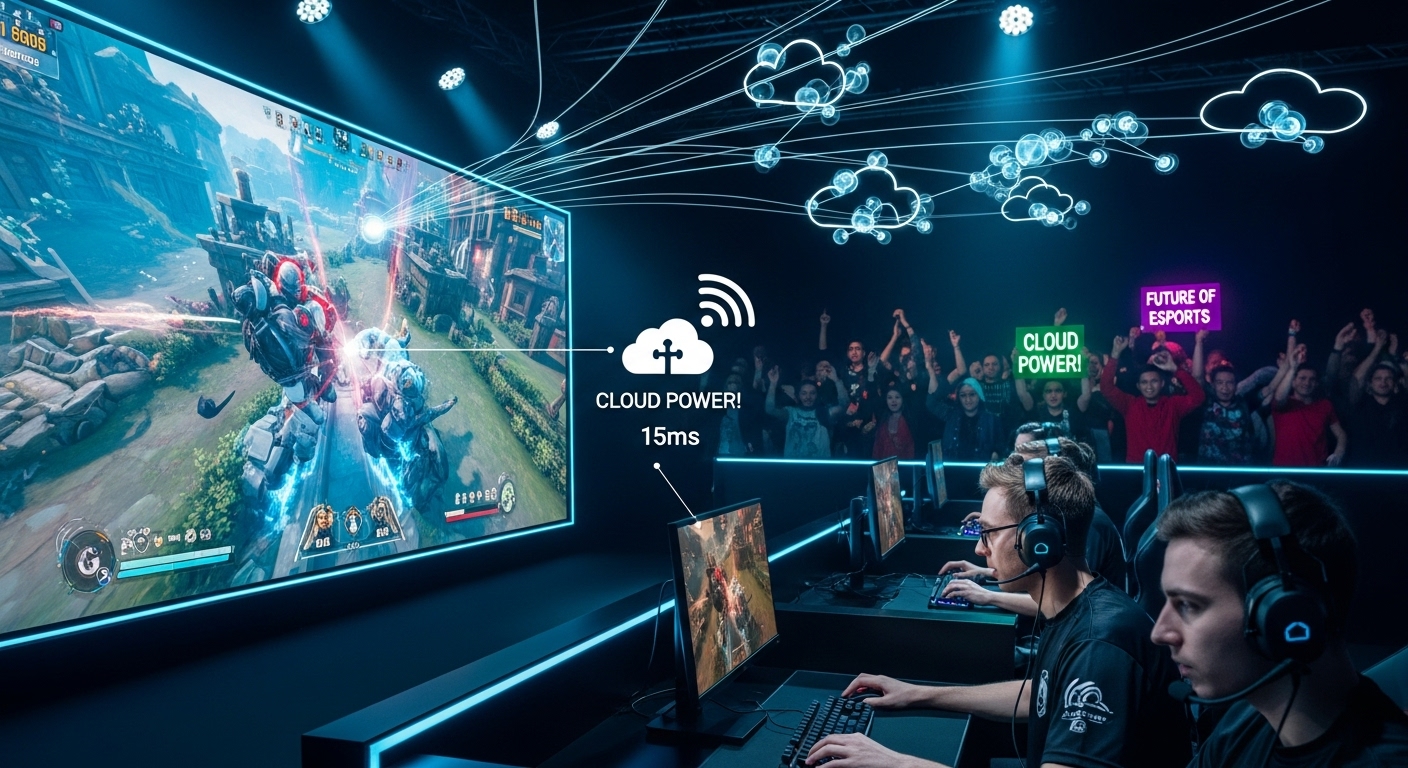
To understand how cloud gaming influences esports, it’s important to first grasp how it works. Traditionally, video games are processed and rendered locally on powerful gaming PCs or consoles. Cloud gaming flips this model. Instead of running the game on your device, it runs on powerful remote servers in the cloud.
The video and audio output from the game are streamed directly to the player’s device, while the player’s inputs—like keyboard or controller commands—are sent back to the server almost instantly. The result is a seamless gaming experience that doesn’t require high-end hardware.
This model is similar to how video streaming services like Netflix work—except instead of streaming movies, you’re streaming a fully interactive, high-performance game.
Lowering Hardware Barriers
One of the biggest advantages of cloud gaming in esports is its ability to remove the need for expensive hardware. For many aspiring players around the world, the cost of a gaming PC or console is simply too high.
Cloud gaming platforms, on the other hand, only require a stable internet connection and a basic device like a laptop, smartphone, or even a smart TV. The game runs on powerful cloud servers, which handle all the heavy lifting.
This shift dramatically levels the playing field. Players from regions with limited access to gaming infrastructure can now participate in competitive games without needing thousands of dollars in equipment. It opens esports to a global audience, not just those with top-tier setups.
For example, a player in a small town with only a mid-range laptop can now compete in the same high-performance environment as someone using a cutting-edge gaming rig. The technology democratizes access, making skill—not wealth—the main factor that determines success.
Expanding Global Reach
Esports has always had a global fan base, but cloud gaming takes this inclusivity to another level. By removing hardware constraints, it allows organizers and publishers to host tournaments that include participants from more diverse regions.
Players from developing countries—where gaming hardware and internet infrastructure have traditionally been limited—can now join global competitions. As long as there’s a stable connection, the skill gap becomes the only real difference.
This global reach not only enhances competition but also promotes cultural diversity within esports communities. Fans get to see new talent from regions that previously struggled to enter the competitive scene, enriching the landscape of global esports.
Affordable Access to High-End Titles
Another way cloud gaming improves accessibility is by making high-end, graphically intensive titles more affordable to play. Games like Counter-Strike 2, League of Legends, or Valorant usually require powerful PCs to run smoothly. But with cloud gaming, these titles can be streamed on devices that would otherwise be incapable of handling them.
Players no longer need to invest in upgrades or new systems every few years. Instead, they can simply subscribe to a cloud gaming service that provides access to the latest games at high performance settings.
This subscription-based model reduces the financial burden of staying competitive. For many, this means being able to participate in esports without the constant struggle of keeping up with evolving hardware demands.
Seamless Cross-Platform Play
Cloud gaming is also breaking down the barriers between platforms. Traditionally, players on different systems—like PC, console, or mobile—were often separated by compatibility issues. Cloud platforms are bridging that divide by enabling cross-platform play with ease.
This has major implications for esports accessibility. Players can now compete together regardless of the device they’re using. Whether you’re playing from a PC café in South Korea, a tablet in Brazil, or a smartphone in Kenya, cloud gaming can connect you to the same competitive arena.
Cross-platform functionality ensures that tournaments are more inclusive and that esports communities are no longer divided by hardware preference or affordability.
Reducing Regional Disparities
Cloud gaming’s server-based model also helps balance competition across regions. In traditional esports, latency and ping often create unfair advantages based on proximity to servers. Players closer to tournament servers enjoy smoother gameplay and faster reaction times.
Modern cloud gaming providers are addressing this by establishing distributed server networks around the world. This means that players from different continents can experience similar latency levels, creating fairer competitive conditions.
For tournament organizers, this innovation simplifies logistics—making global events easier to host without the need for every player to travel physically to the same location.
Accessibility for Players with Disabilities
Cloud gaming doesn’t just improve economic accessibility—it also enhances inclusivity for players with disabilities. Many cloud gaming platforms offer customizable control schemes, voice commands, and adaptive technology integration that traditional systems lack.
Because games are streamed, developers can easily add accessibility features directly to the cloud interface, allowing users to adjust settings like font size, color contrast, or control mapping instantly.
Moreover, cloud gaming can support specialized input devices that assist players with limited mobility, making esports a more welcoming environment for everyone.
Enabling Instant Updates and Fair Competition
One of the challenges in esports has been ensuring that every participant is playing under the same game conditions. Cloud gaming helps eliminate discrepancies by hosting a uniform version of the game on centralized servers.
This means updates, patches, and balance changes can be deployed instantly to all players at once. There’s no risk of someone running an outdated version or suffering from mismatched configurations.
For tournament organizers, this simplifies setup and ensures fairness. For players, it guarantees that competition happens under consistent conditions—no more version mismatches or system-specific bugs.
Spectator and Streaming Advantages
Cloud gaming doesn’t just benefit players—it also enhances the experience for viewers and fans. Since all game data is stored and processed in the cloud, spectators can access dynamic viewing options like real-time stats, multiple camera angles, and interactive overlays.
Tournaments hosted on cloud platforms can easily integrate live commentary, instant replays, and social media engagement features directly into the broadcast. This makes watching esports more immersive and interactive for global audiences.
The scalability of cloud infrastructure also allows thousands—even millions—of fans to tune in simultaneously without lag or buffering issues, ensuring a smooth viewing experience across the world.
Simplifying Tournament Organization
Hosting large-scale esports tournaments can be complex, involving massive logistical planning for player setups, equipment, and local networking. Cloud gaming simplifies this process dramatically.
Since the game runs remotely, organizers no longer need to prepare hundreds of gaming stations with identical hardware configurations. Players can log in from their own devices, with all the processing happening in the cloud.
This streamlines operations, reduces costs, and opens the door for more frequent tournaments—even at grassroots levels. Smaller communities and amateur organizers can now host competitive events that feel professional without massive investments in equipment.
Supporting Sustainable Esports
Cloud gaming can also play a role in making esports more sustainable. By reducing the need for constant hardware upgrades and global travel, it minimizes electronic waste and carbon emissions.
Data centers that power cloud platforms are increasingly adopting renewable energy sources, making the overall process more eco-friendly. In an industry that relies heavily on technology, this step towards sustainability is a meaningful contribution to the planet’s future.
The Role of Internet Infrastructure
While cloud gaming offers incredible accessibility, its success depends heavily on reliable internet connectivity. High-speed broadband or 5G networks are essential for smooth, low-latency experiences.
Fortunately, global investments in internet infrastructure are rapidly improving. As 5G coverage expands, cloud gaming will become even more viable, especially in developing regions where wired internet access is limited.
This evolution means that in the near future, anyone with a smartphone and a decent mobile connection could participate in professional-level esports without any hardware constraints.
Challenges That Remain
Despite its promise, cloud gaming isn’t a perfect solution—yet. Internet instability, data limits, and regional infrastructure gaps still pose challenges. Players in rural areas may struggle with consistent connectivity, which can impact performance during competitive matches.
Additionally, some purists argue that cloud gaming introduces minor input delays compared to traditional local setups, which could affect games that rely on ultra-fast reactions. However, ongoing advancements in compression technology and edge computing are steadily addressing these issues.
As infrastructure continues to improve, these challenges will become less significant, paving the way for cloud gaming to fully integrate into the esports ecosystem.
The Future of Esports Accessibility
The future of esports will likely be built on cloud gaming foundations. As technology advances, we can expect seamless integration between platforms, instant access to competitive titles, and even more inclusive global tournaments.
Cloud gaming’s ability to level the playing field makes it a perfect match for the spirit of esports—competition based purely on skill, strategy, and teamwork. It has the potential to transform esports from a niche digital sport into a truly universal experience accessible to anyone, anywhere.
Conclusion
Cloud gaming is more than just a technological evolution—it’s a revolution in accessibility. By eliminating the need for expensive hardware, simplifying tournament logistics, and reaching players in underserved regions, it’s redefining who can compete in esports.
From global participation to inclusivity for players with disabilities, cloud gaming is expanding the horizons of what esports can be. While challenges like network limitations remain, the progress already made shows an exciting direction for the future.
As the technology continues to mature, the dream of a fully inclusive esports world—where anyone with a device and passion can compete at the highest level—is no longer out of reach. Cloud gaming is not just changing how we play—it’s changing who gets to play.