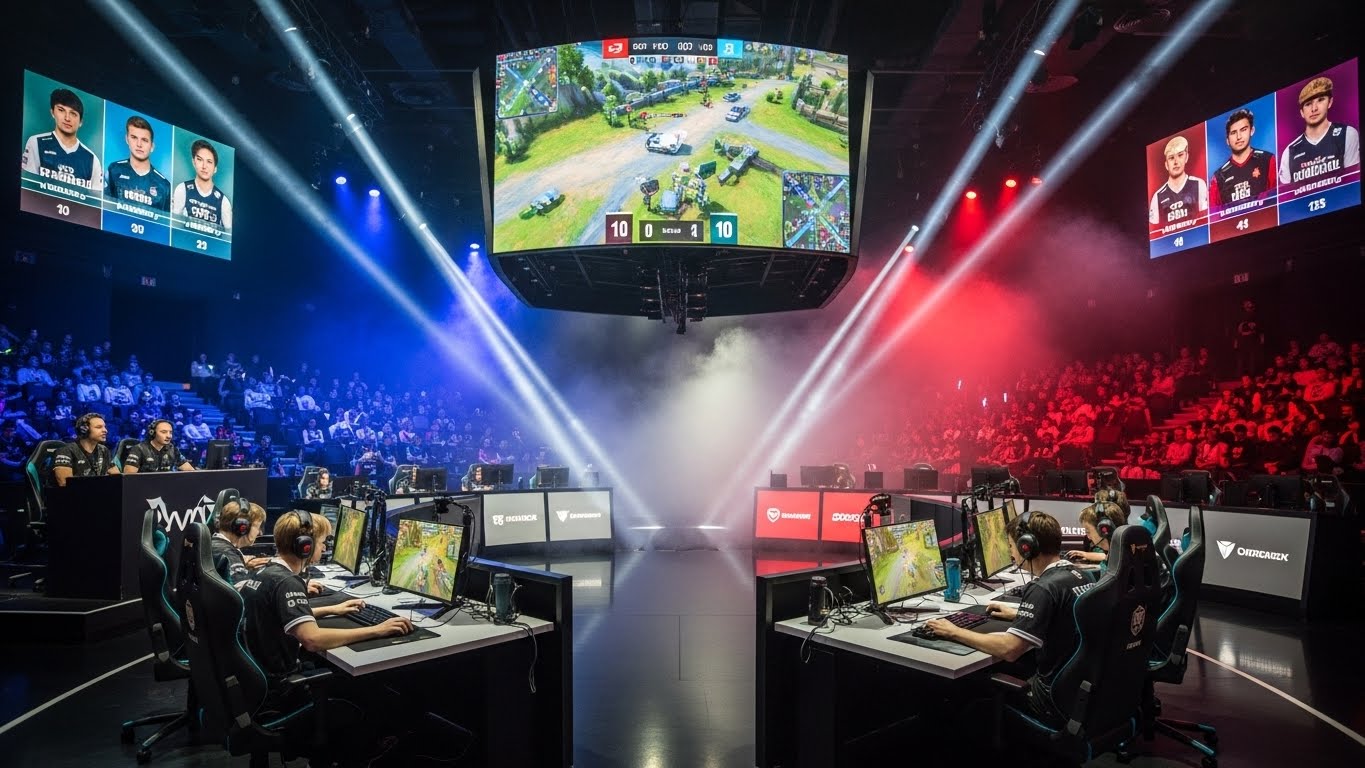
In the past few decades, gaming has evolved from a solitary hobby to a vibrant, competitive industry that attracts millions of players and viewers around the world. Esports, short for electronic sports, has emerged as a global phenomenon, reshaping the entertainment and sports landscape in ways that were once unimaginable. What began as informal, local tournaments has transformed into a multi-billion-dollar industry with professional leagues, global competitions, and a rapidly growing fan base. Esports is no longer just about gaming for fun—it’s about competition, teamwork, and strategy at the highest level, offering something unique for both players and spectators alike.
The Birth of Esports
The origins of esports can be traced back to the early days of video gaming, when players began competing against one another in arcade games and later, PC games. The first true esports tournament took place in 1972 at Stanford University, where students competed in a space-themed game called Spacewar. While this event was small and isolated, it set the stage for future competitions. The growth of online multiplayer games in the 1990s, such as Quake and StarCraft, played a significant role in shaping the competitive gaming scene. These games allowed players to connect and compete in real-time, paving the way for what we now recognize as esports.
In the early 2000s, esports started to gain serious traction with the launch of professional leagues and tournaments. Games like Warcraft III, Counter-Strike, and League of Legends brought together passionate players and fans, while platforms like Twitch and YouTube allowed players to stream their gameplay for global audiences. As technology improved and internet speeds became faster, esports quickly evolved into a global spectacle, attracting corporate sponsorships, media coverage, and major investors.
The Appeal of Esports: Why It’s Different from Traditional Sports
Esports has garnered a massive following in recent years, especially among younger generations. One of the key reasons for its popularity is the accessibility of gaming. Unlike traditional sports, which often require physical facilities, expensive equipment, or specific skill sets, esports can be enjoyed by anyone with a computer or gaming console. This democratization of competition has opened doors for countless players, from casual gamers to professional athletes.
Another unique aspect of esports is its virtual nature. The games played in esports are often complex, requiring a combination of strategy, reflexes, and team coordination. In games like Dota 2, League of Legends, or Overwatch, players must manage resources, plan tactics, and execute split-second decisions—all within a digital environment. The appeal of esports is not only the skill and intensity of the competition but also the storytelling element that unfolds during each match. Spectators are not just watching players compete—they’re witnessing the evolution of strategies, rivalries, and personal journeys that make esports so engaging.
Moreover, esports offers a level of inclusivity that traditional sports may not always provide. It doesn’t matter where players are from, what their physical abilities are, or how old they are—anyone can become a part of the esports community. As a result, esports has become a melting pot of diverse individuals from all walks of life, creating a sense of global connection and unity among players and fans.
The Growth of the Esports Industry
The growth of esports has been nothing short of extraordinary. According to recent industry reports, the global esports market is valued at over $1 billion, with projections indicating further expansion in the coming years. Esports tournaments now offer multi-million-dollar prize pools, attracting top-tier talent and providing players with lucrative careers. The most successful esports athletes can earn millions from sponsorships, streaming revenue, tournament winnings, and merchandise sales.
One of the driving forces behind this growth has been the increasing involvement of major corporations and sponsors. Companies like Coca-Cola, Red Bull, Intel, and Nike have entered the esports scene, recognizing the potential of this young, tech-savvy audience. The inclusion of esports in major media outlets and its broadcasting on platforms such as Twitch, YouTube, and traditional TV channels has only further amplified its popularity.
Esports has also become a hub for brand partnerships, with gaming peripherals companies, energy drink brands, and even fast food chains signing sponsorship deals with teams and events. These collaborations have helped elevate esports from a niche community to a mainstream entertainment force. Furthermore, major game developers like Riot Games, Valve, and Blizzard Entertainment have invested heavily in creating and supporting professional esports leagues, ensuring the longevity and growth of competitive gaming.
The Role of Streaming and Content Creation in Esports
A key factor in the rise of esports has been the growth of game streaming platforms like Twitch and YouTube. Streaming has become an essential part of the esports ecosystem, allowing players to broadcast their gameplay to global audiences in real time. This shift has allowed fans to follow their favorite players, watch live tournaments, and engage with the community in ways that were previously impossible. The ability to watch high-level gameplay, learn strategies, and even interact with players through live chat has brought a new layer of excitement to esports.
Content creation has also played a crucial role in the growth of esports. Many top-tier players have built massive followings by creating content that goes beyond tournament play. From casual streams to tutorial videos, the variety of content has helped maintain the engagement of fans. In some cases, professional players have become celebrities in their own right, with social media platforms serving as their stage for personal branding and community interaction. Content creators and streamers are now some of the most influential figures in the gaming world, with their opinions, recommendations, and personalities shaping the culture of esports.
The Competitive Landscape: From Solo to Team
Esports competitions come in various formats, from single-player tournaments to team-based leagues. Different genres of games lend themselves to different types of competition. First-person shooters (FPS) like Counter-Strike and Call of Duty tend to feature highly competitive individual players or teams of players who battle for supremacy. Multiplayer online battle arena (MOBA) games like League of Legends and Dota 2, on the other hand, require precise coordination between team members and in-depth strategies.
In these team-based games, players often specialize in certain roles, such as attackers, defenders, or support characters. The best teams have a strong synergy, with each member complementing the others’ strengths and covering for weaknesses. This collaborative aspect of esports highlights the importance of teamwork, communication, and leadership, which are skills that translate well beyond gaming into real-world situations. Professional esports teams are often backed by managers, coaches, analysts, and support staff, mirroring the structure of traditional sports organizations.
At the same time, individual esports players, particularly in games like Fortnite or StarCraft II, have become prominent figures within the esports community. These players are highly skilled in their respective games and often have a dedicated following of fans who watch their streams and cheer them on during major events. Esports has truly become a place where both individual talent and team coordination are equally valued.
Esports and the Future of Entertainment
Esports has already carved out its place in the entertainment world, but its potential is far from fully realized. As the technology behind esports continues to improve, so too does the experience for both players and spectators. Virtual reality (VR) and augmented reality (AR) are on the horizon, with the possibility of creating even more immersive gaming experiences. These technologies could revolutionize how esports events are played, watched, and enjoyed, bringing fans closer to the action than ever before.
Moreover, the rise of mobile gaming has opened up new avenues for esports growth. Mobile esports tournaments, such as PUBG Mobile and Clash Royale, have gained significant traction in regions like Asia, where mobile gaming is especially popular. As mobile technology continues to improve, the mobile esports market will likely expand, further contributing to the overall growth of the industry.
Esports is also paving the way for a new kind of fan experience. Unlike traditional sports, esports fans can engage with the games they watch on a deeper level. They can participate in live polls, vote on in-game decisions, or even interact with their favorite players in real time. As esports becomes more integrated with social media, mobile apps, and interactive platforms, the fan experience will continue to evolve, offering a more personalized and dynamic way to enjoy competitive gaming.
The Challenges Facing Esports
Despite its rapid growth, esports faces a few challenges. One of the main hurdles is the lack of regulation in certain areas, such as player contracts, sponsorship deals, and match-fixing. As the industry continues to professionalize, these issues will need to be addressed to ensure fair play and transparency. Additionally, the mental and physical health of players has become a growing concern. Professional esports players often spend long hours practicing, which can lead to burnout and health issues like repetitive strain injuries. With the increasing demands of the industry, ensuring the well-being of players is critical for the sustainability of esports.
Conclusion: Esports Is Here to Stay
Esports has come a long way from its humble beginnings, and there is no doubt that it is here to stay. It has evolved into a multi-billion-dollar industry with a global fan base and professional leagues that rival traditional sports in terms of viewership and revenue. With the continued support of gamers, developers, sponsors, and fans, esports will continue to thrive and evolve, providing opportunities for players and creating new forms of entertainment for audiences worldwide. As esports continues to grow, it will undoubtedly shape the future of competitive gaming and entertainment for years to come.


